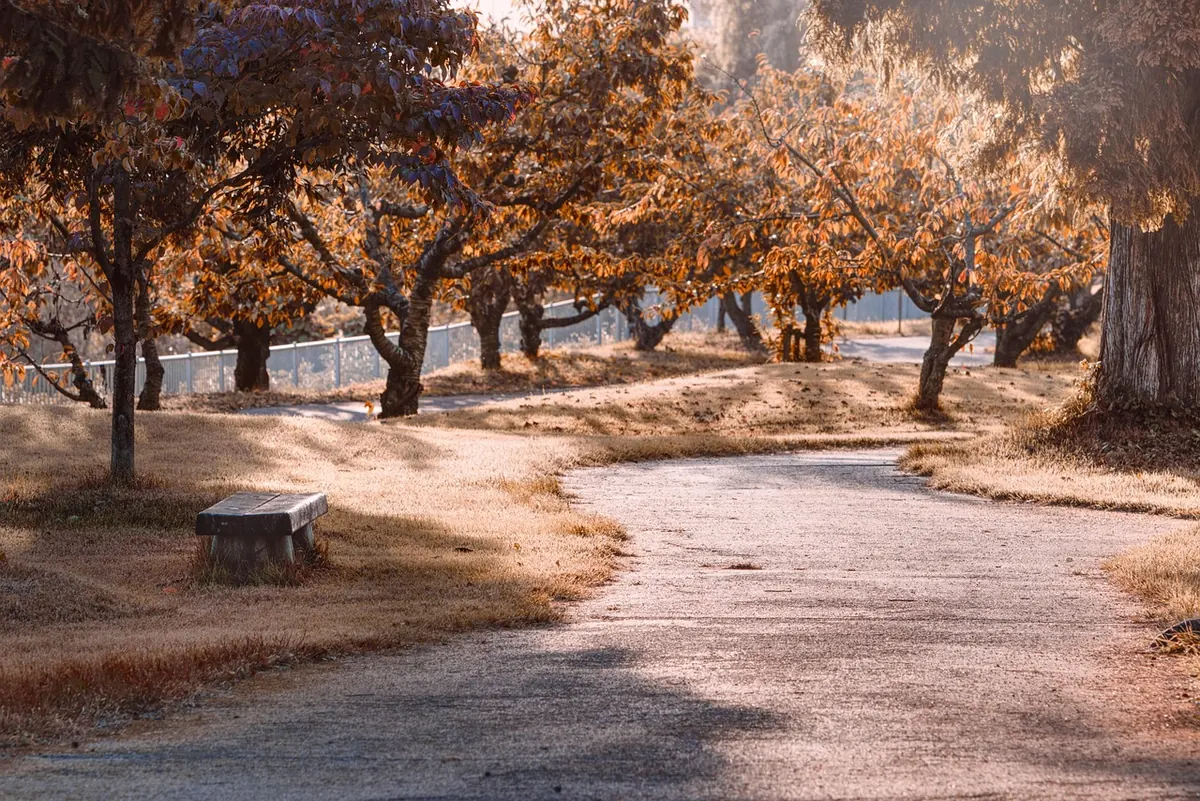
British autumn rarely arrives on cue. It leaks in. A grey morning in late September when the air smells of wet leaves and diesel; a coat lifted off the hook for the first time since March; an afternoon that goes dim at half past four and takes you by surprise. By the time the clocks go back, something has shifted, and most of us feel it long before we could name it. That unnamed shift is the real subject of an autumn essay — not the season, but change, and how we notice it.
Autumn is also the most over-written season in English, which makes it easy to write badly. Golden leaves, mist, melancholy: the shorthand sits there waiting, and readers have seen all of it. The way through is specificity — your street, your kitchen, your particular memory — plus a few techniques that keep an essay moving instead of sighing.
Essays that open with the season itself tend to stall, because the season is too big to hold. Autumn is a time of change and reflection gives you nowhere to go. A specific day does the opposite: it gives you weather, objects, a time of day and someone else in the room.
Try opening on an ordinary weekday. The morning you first needed the heating on. The walk to the bus stop when the puddles had filmed over. The Tuesday in October when you noticed the light in the kitchen had turned the colour of weak tea. Once the reader is standing in that scene, the season can arrive quietly behind them.
British weather rewards close attention because it is so local. Mizzle in the Pennines is not the haar off the North Sea, and neither is the stiff easterly that strips a Norfolk garden in a single afternoon. Use the words you actually use. If your family says "back end" for late October, put it in.
Good prompts are narrow enough to answer. Each of these should give you a scene within a paragraph or two:
Pick one. If you find yourself writing about all nine, you are writing about autumn in general, which is the thing to avoid.
Autumn essays turn on memory more often than not, and this is where the writing goes soft. Sentences beginning "I remember" ask the reader to take your word for it. An object does the work instead.
A workable shape is two timelines. Open in the present tense, close to the ground: the cold tiles, the mug held for warmth, the radio on in the next room. Then let one detail pull you into the past — the same mug, a different kitchen — and write that section in the past tense. Come back to the present for two or three sentences and change something small. The lamp is already on. The chair is empty. Nobody has to explain what that means.
My grandmother's hands smelled of paraffin and wet wool, and she always knew which hedges the other pickers had missed.
One object per paragraph. Two or three images in a single paragraph and they cancel each other out.
Change is easier to show than to state. Adjectives sit still; verbs move. Instead of the trees were beautiful, try what the trees were doing: shedding, thinning, holding on, going bare from the top down.
Three dials are worth tracking through any autumn piece:
Move one of these dials between your opening and your closing paragraph and the essay will register as a change even if nothing dramatic happens.
Britain hands you fixed points: the clocks going back on the last Sunday in October, half term, Harvest Festival assemblies, Bonfire Night on the fifth of November, Remembrance Sunday, the first frost that catches everyone out. These make excellent scaffolding. A walk taken three times — September, October, November — gives you shape without your having to announce a theme.
They make poor content on their own. A list of dates is a diary entry, not an essay. Each marker has to carry a personal stake: who was there, what was said, what has changed since last year. If a date does not earn its place, cut it.
Draft freely, then edit hard. Read the piece aloud; the sentences that make you wince are usually the ones doing the most pretending. Hunt down golden, crisp, melancholy and bittersweet and ask what each one is standing in for. Nine times out of ten, a concrete detail is waiting underneath.
Then look at your final line. If it explains what the essay means, delete it and end on the last concrete image instead. Readers are good at this. Trust them.
Keep the draft. In a fortnight, with the clocks changed and the dark arriving earlier, you will see what the piece was really about — and the second draft will be sharper for it. An autumn essay works when a reader recognises their own September in your particular one, and that only happens when you stay close to the ground: the mug, the gate, the cold tiles, the person who was there.
Photo: dep377 / Pixabay

Why the British tell ghost stories at Christmas, and how to write your own — from cold settings and quiet dread to a...

Build a daily reading habit in thirty days with a simple plan: ten-minute sessions, short stories, essays and poems,...

A practical guide to turning personal experience into an essay that resonates — starting with the scene, finding the...

A new story every day for readers..
