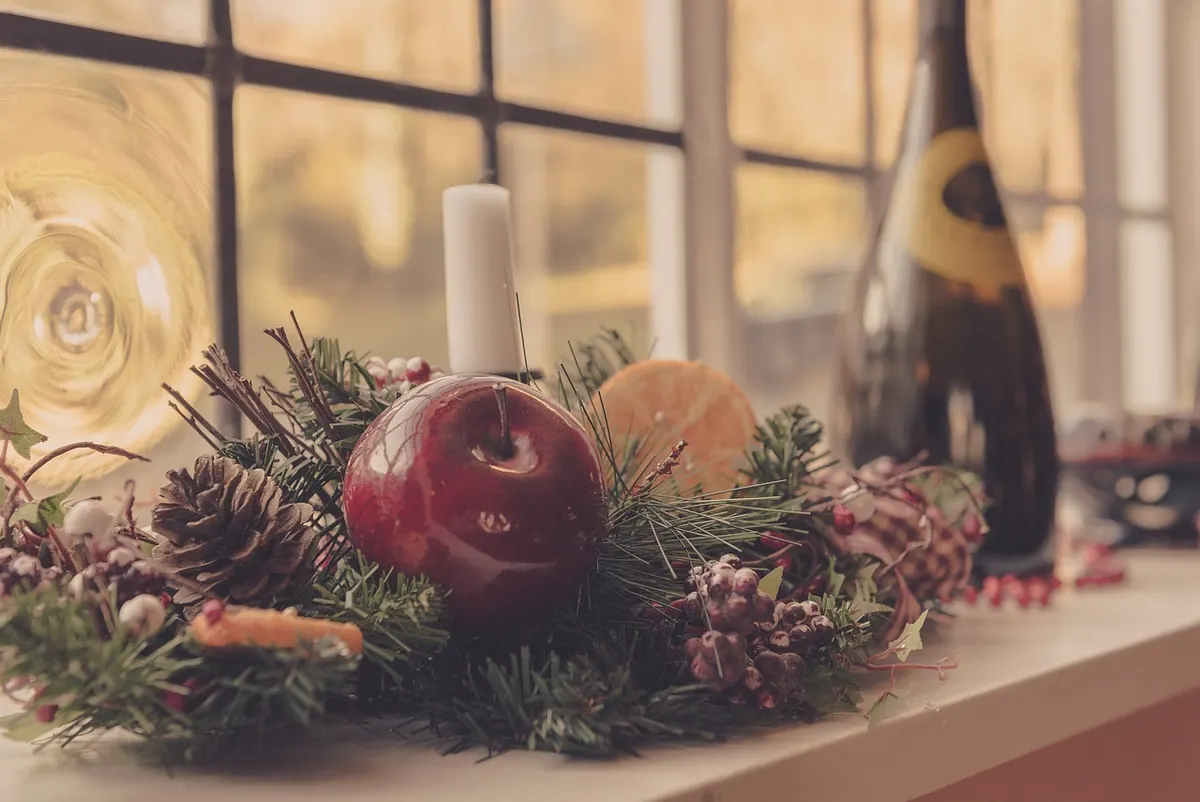
By the time the tree goes up, the afternoons have already given in. It is dark by four, the heating clicks on, and somewhere in the house someone is looking for an excuse to sit still. That hour — early, enclosed, faintly uneasy — is the natural home of the Christmas ghost story. Not Halloween, with its costumes and sugar, but the dead centre of the year, when the British have always told tales of the dead to pass the long nights. Write one this year and you are joining a tradition with a ready-made atmosphere and an audience already in the mood.
The midwinter ghost story is older than the Christmas card. Long before Dickens, the solstice was a time for fires, close company and stories about whatever might be outside. The Victorians made a business of it: Dickens published A Christmas Carol in 1843, then filled the Christmas numbers of his magazines with hauntings by other hands — Elizabeth Gaskell's "The Old Nurse's Story" appeared in one of them. Henry James set the telling of The Turn of the Screw on Christmas Eve. And at King's College, Cambridge, M. R. James gathered friends on Christmas Eve to read a fresh story aloud by candlelight, a ritual that produced some of the finest short ghost stories in the language.
The tradition survived the fire and the candle. Television picked it up: the BBC's A Ghost Story for Christmas has been adapting James and others since the 1970s, and the formula — a cold house, a curious man, a thing that should not be there — still works every year.
Read a dozen Christmas ghost stories in a row and the same qualities surface.
Your setting does half the work, so choose it deliberately. Christmas gives you three gifts: darkness, weather and obligation. A house full of relatives is as isolating as a moorland cottage if the person who understands what is happening cannot say so.
Get specific. A tide mill on the Essex marshes. A rented flat above a shop that closes at six. A hospital corridor at three in the morning. Then strip out the comforts: the electricity fails, the signal goes, the road floods. In the dark, sound and smell matter more than sight — pipes ticking, wind in a chimney, coal dust, candle grease, wet wool.
One object, described exactly, will do more than a paragraph of atmosphere. A whistle found on a beach. A photograph with someone half out of frame. A handprint on a cold window that fogs, clears, and is still there.
The moment a ghost explains itself, the story deflates. Let the reader do the work: a shape at the edge of the torch beam, a voice on the stairs that says your name correctly. If you must show something, show it once, briefly, in plain language.
Ghost stories run on folk logic. Don't answer the knock. Don't look back. Don't take the shortcut through the churchyard. Give the reader the rule early, let the character know it too, then have them break it for an entirely human reason — impatience, kindness, a need to be proved right.
The best frights arrive in domestic objects: a bed, a nursery rhyme, a telephone, a bowl of soup. Keep the prose calm. Understatement makes the uncanny credible, and credibility is the whole game.
Christmas ghost stories are usually short — 1,500 to 4,000 words suits a fireside reading. A shape that rarely fails:
Many classic tales arrive inside a document: a letter, a journal, a statement taken down by a solicitor. The frame lends credibility and gives you a second ending — you can finish on the teller's face rather than the ghost. Christmas supplies a natural version of it. A house party, a power cut, someone asked for a story, and a guest who says he has one he has never told anyone.
Keep the frame brief: a page at the start, a paragraph at the end. Then read your draft aloud, because these stories were oral long before they were printed. Any sentence you stumble over is a sentence to cut. Anything that sounds like a performance is working; anything that sounds like a paragraph is not.
If you want a finished story by Christmas, work backwards from a reading.
Then find somewhere to read it. A writing group, a storytelling night, a friend's kitchen. UK magazines and anthologies often open winter submission windows, so check their guidelines rather than guessing; ghost stories are usually welcome in any season.
The point of a Christmas ghost story was never the fright. It was the company: a small circle, a low
Photo: StockSnap / Pixabay

Build a daily reading habit in thirty days with a simple plan: ten-minute sessions, short stories, essays and poems,...
Seasonal prompts and practical techniques for writing autumn essays about change, memory and transition in Britain —...
A practical guide to turning personal experience into an essay that resonates — starting with the scene, finding the...

A new story every day for readers..
